Growth journey
This is a living case study, not a finished story.
VialVerdict should feel like a project people can follow over time. The first version is live, but the bigger lesson is watching the site move through each stage: picking the niche, choosing the domain, building the site, researching vendors, measuring traffic, earning links, improving AEO, and updating the case study as new things happen.
Niche selection
Pick a market with buyer intent, confusion, comparison searches, and enough products or vendors to organize better than the existing results.
Domain name selection
Use NameMesh to brainstorm names, then choose a domain that feels clear, memorable, and flexible enough for the site to grow.
Site build
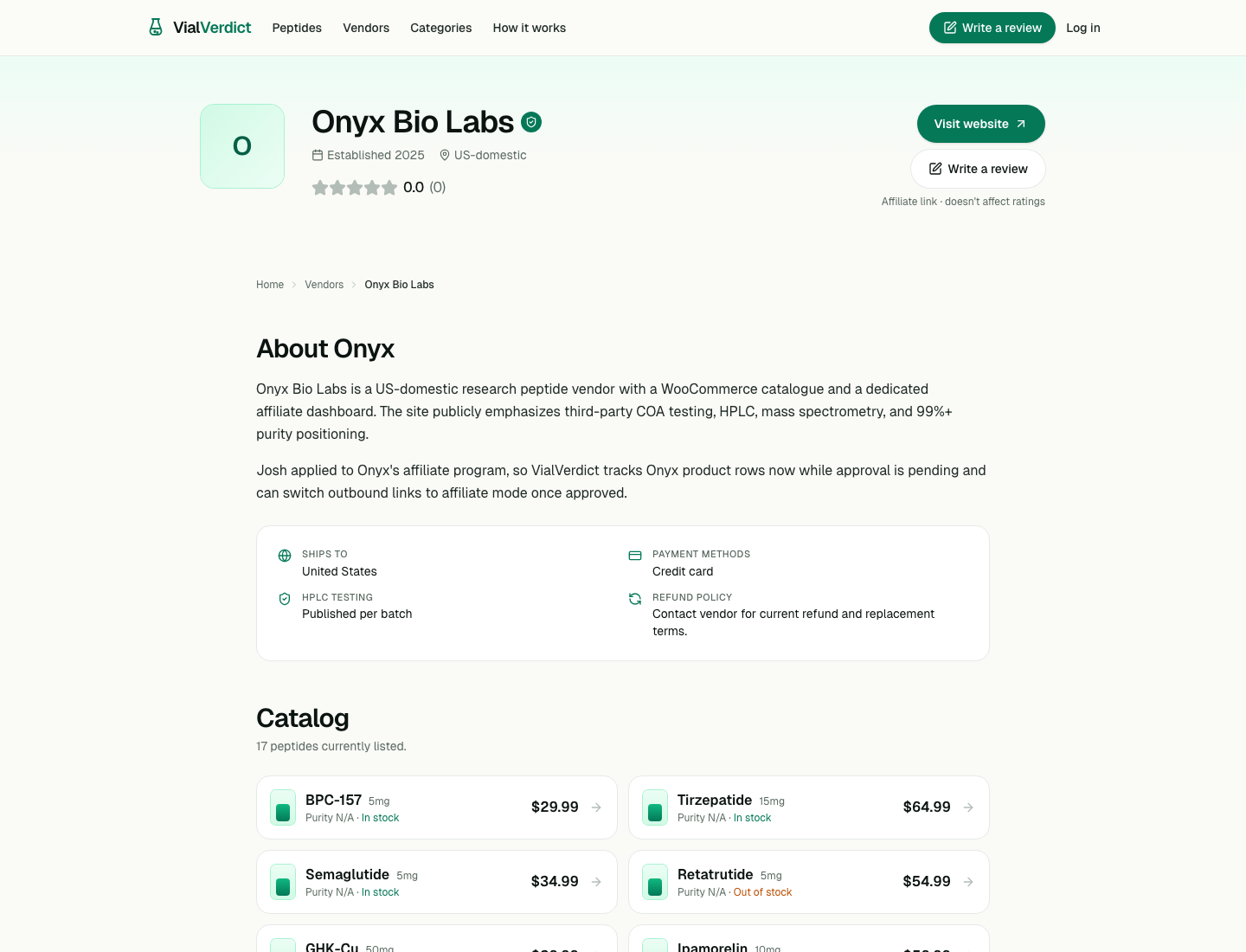
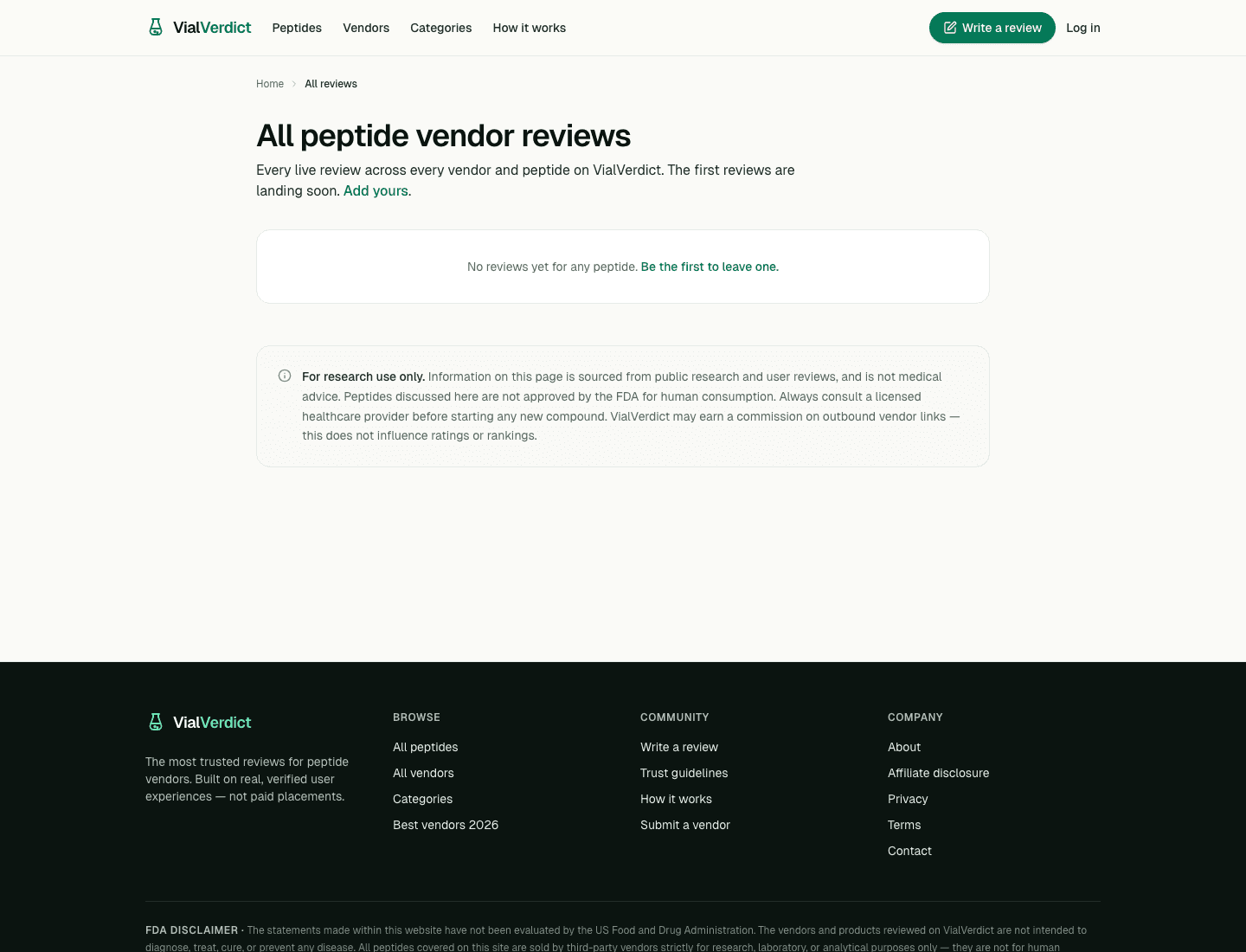
Build the first version of the site: homepage, vendor directory, vendor pages, product pages, trust pages, and disclosure pages.
Vendor and affiliate research
Research vendors, check public claims, look for affiliate programs, and keep adding cleaner profiles as more information is found.
Google Analytics + Google Search Console
Measure what Google is seeing, which pages get impressions, what people click, and where the site needs stronger content or internal links.
Promotion strategies
Start earning attention and links through useful resources, outreach, partner mentions, comparison pages, data-style assets, and updates worth referencing.
AEO
Make the site easier for answer engines to understand with clear questions, direct answers, named entities, helpful summaries, and well-linked pages.
Case study updates
As VialVerdict gets new pages, affiliate approvals, rankings, links, analytics data, and lessons, this case study should be updated too.
The tool stack: Sidekick, Cloudflare, GitHub, Vercel, and the site itself
The useful story is not “AI wrote a website.” The useful story is that a Sidekick Superagent from getasidekick.ai sped up the boring research work, then normal website tools helped turn that work into pages people can actually use.
Sidekick helped with the slow parts: finding vendors, pulling together public details, drafting rough notes, and flagging what still needed a human check.
Cloudflare handled the domain, SSL, caching, and basic protection layer. GitHub kept the code and content changes organized so the project had a clear history and rollback path.
Vercel handled hosting and deployment. Next.js and Tailwind made it easier to reuse layouts for the vendor directory, individual vendor pages, peptide research pages, and best-of comparison pages.
The content catalogue kept vendors, products, affiliate notes, and updates organized instead of letting the site become a messy pile of articles.
Human judgment still owned the strategy, trust standard, affiliate decisions, wording, and final publishing call.
Sidekick
The research helper. Sidekick helped find vendors, pull together public details, draft rough notes, and point out what still needed a human check.
- Vendor research
- First drafts
- Fact checks
- Update ideas
Cloudflare
The domain and protection layer. Cloudflare helps handle DNS, SSL, caching, and the basic edge setup for the public site.
- Domain setup
- SSL
- Caching
- Protection
GitHub
The place where the site code lives. It keeps a history of changes, makes updates easier to review, and gives the project a rollback path.
- Code storage
- Change history
- Review flow
- Rollback path
Vercel
The hosting and deployment layer. Vercel turns the code into a live site and makes it easy to ship updates without managing servers.
- Hosting
- Deploys
- Preview links
- Fast pages
Next.js + Tailwind
The website framework and styling setup. This is what makes it possible to reuse layouts for vendor pages, peptide pages, best-of lists, and trust pages.
- Page layouts
- Reusable blocks
- Mobile design
- SEO basics
Content catalogue
The organized list of vendors, products, categories, affiliate notes, and update tasks that keeps the site from becoming a messy pile of articles.
- Vendors
- Products
- Affiliate notes
- Updates
Site breakdown
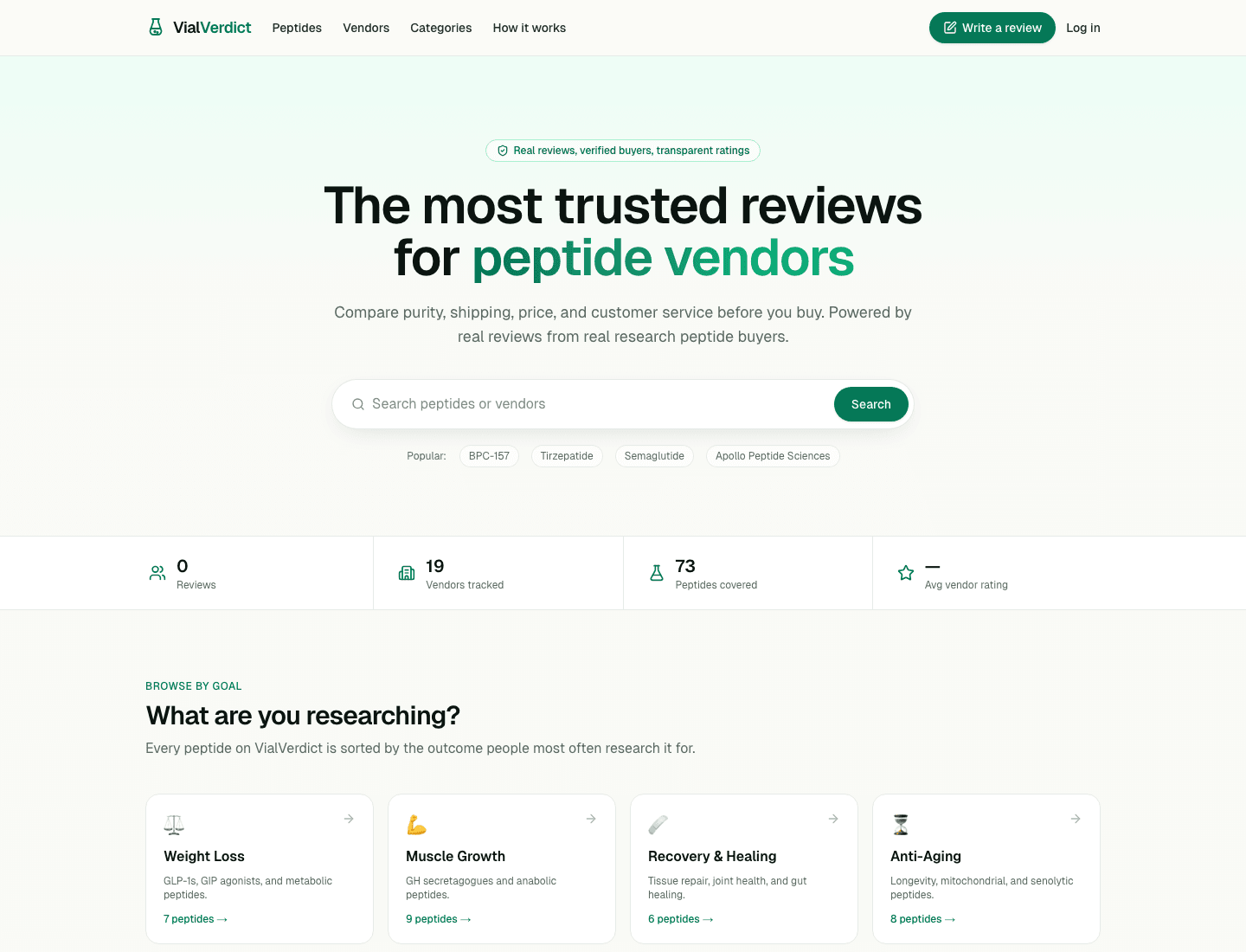
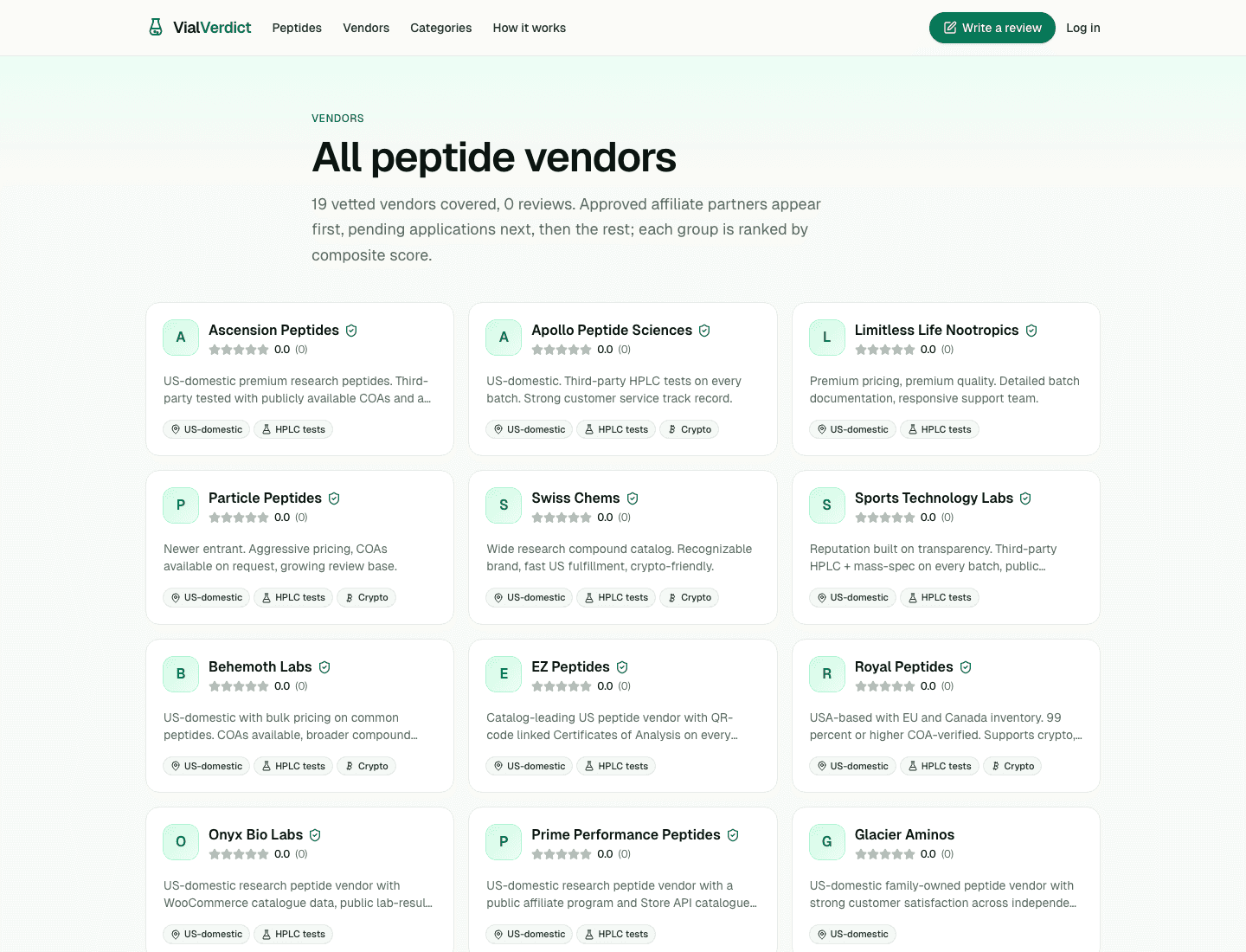
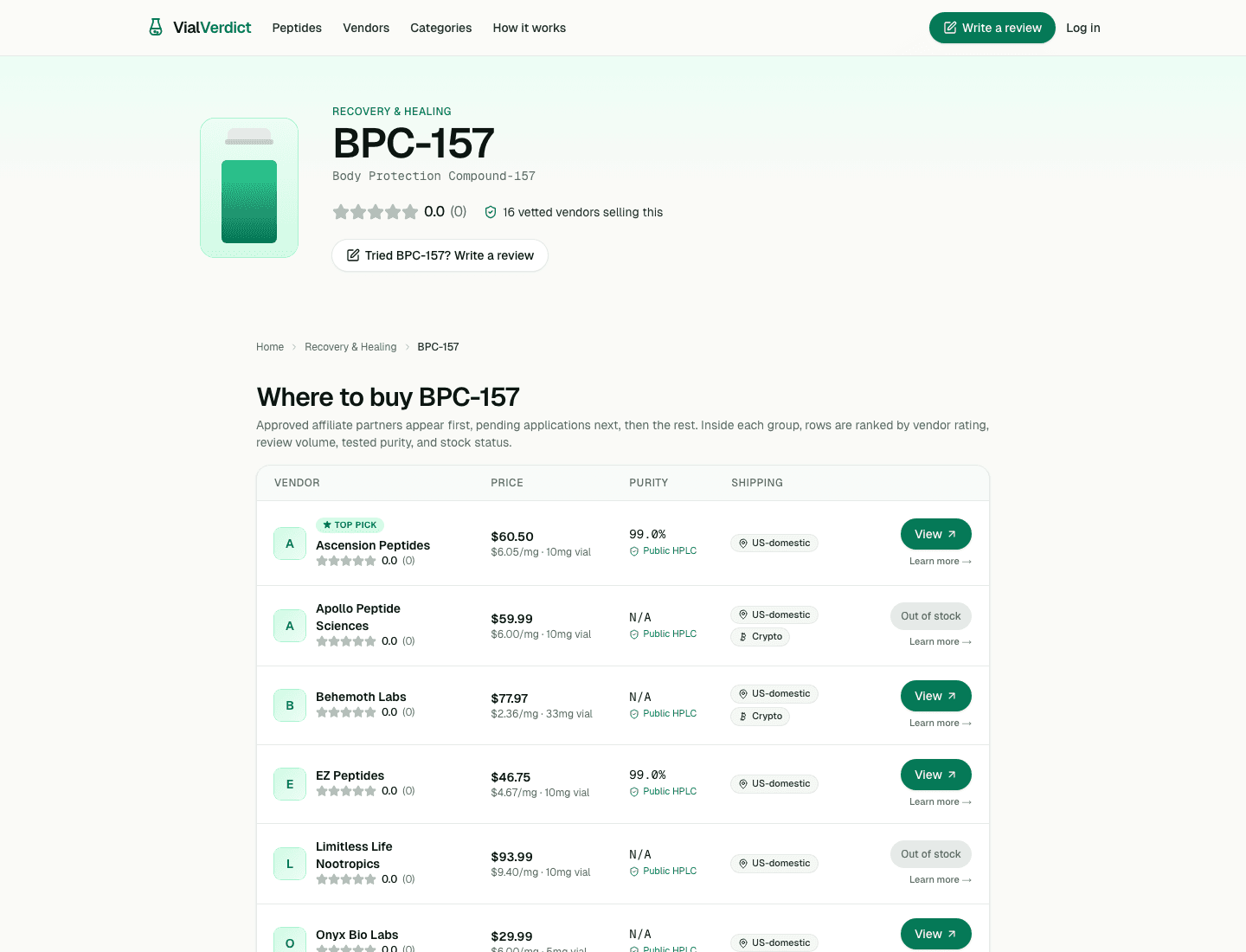
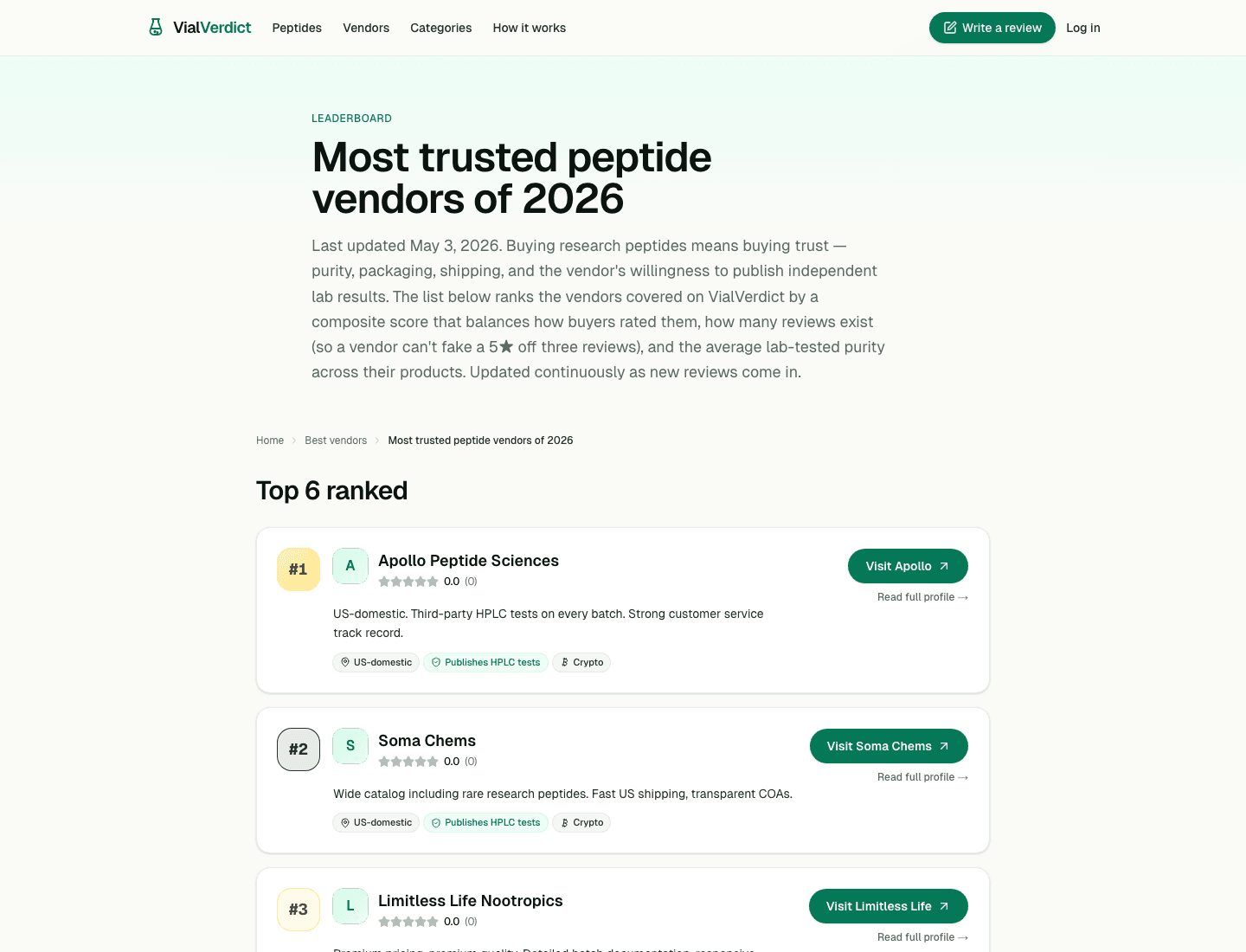
The site is a set of linked decision surfaces.
Instead of one giant article, VialVerdict is organized around pages that answer different buyer questions. That makes it stronger for readers, SEO, and answer engines.
The build workflow
The build worked because the work was broken into checkable units. A Sidekick Superagent can research a vendor. Another pass can turn the notes into a record. A page template can turn records into useful pages. A human can review the output, soften claims, add links, and decide whether the page is ready.
That is the repeatable playbook for other niches too: find a confusing market, organize the important details, use a Sidekick Superagent to speed up research, and turn the notes into pages that get better over time.
Map the market before writing pages
- Find visible vendors
- Collect repeated product categories
- Note testing and quality claims
- Identify affiliate-program paths
Organize the research
- Clean up vendor names and links
- Group products clearly
- Note affiliate status
- Save screenshots and notes
Turn it into useful pages
- Vendor directory
- Individual vendor profiles
- Peptide/product pages
- Best-of comparison pages
Add trust and search-friendly answers
- Careful wording
- Helpful internal links
- Short Q&A sections
- Disclosures and trust pages
Search lesson
Search engines need clear pages and direct answers.
VialVerdict is useful inspiration for Screw The Nine To Five because it connects the important parts of a niche: vendors, products, categories, trust guidelines, affiliate disclosures, and comparison pages. The next layer is promotion and AEO: earning the right links, making pages easier to cite, and giving search and answer engines clearer answers to work with.
What is VialVerdict?
VialVerdict is a peptide vendor research and comparison site with vendor pages, peptide pages, best-of pages, review surfaces, trust guidelines, and affiliate disclosures.
How was a Sidekick Superagent used to build VialVerdict?
A Sidekick Superagent from getasidekick.ai helped gather public vendor information, draft notes, spot affiliate signals, and flag anything that needed a human review. Human judgment handled the strategy, wording, trust standards, and publishing decisions.
What is the business lesson from VialVerdict?
The lesson is to build something genuinely useful in a messy market. The value is the organized vendor list, helpful pages, trust layer, internal links, and updates — not just AI-written content.
Will this case study be updated?
Yes. The plan is to update the case study as VialVerdict moves through promotion, link building, AEO improvements, analytics learnings, affiliate approvals, and new site milestones.
Key lessons from the build
Build your version
The right online income asset starts by making a messy topic easier to understand.
Use the free guides, case studies, and reviews to choose your model, understand the tools, and build something useful enough to keep maintaining.